Data Governance
What Is a Data Governance Framework? A Practical Guide
An organisation wants to use customer data for a new analytics or artificial intelligence project. The idea appears straightforward until questions begin.
Who can approve the use? Is the data suitable and legally available for it? Who should have access? Who will monitor the project?
The organisation may already have policies, security tools and capable people. The difficulty is that these elements do not automatically produce a consistent decision. They must be connected.
That is the purpose of a data governance framework.
What is a data governance framework?
A data governance framework is the structure an organisation uses to define how decisions about data are made, who is accountable, which rules and processes apply, and how performance and compliance are monitored.
It turns the broader idea of data governance into an operating arrangement. It helps people answer practical questions throughout the data lifecycle: what may be collected, who may use it, how it is protected and shared, and what happens when it is no longer needed.
The US Federal Data Strategy describes data governance as setting and enforcing priorities for managing and using data as a strategic asset. Its Data Governance Playbook connects governance with authority, policies, roles, inventories, issue management, assessment and oversight.
A framework is therefore more than a policy, committee, organisational chart or technology platform. Each may form part of the framework, but none is sufficient by itself.
What does the framework govern?
Data governance is broader than privacy compliance. Depending on the organisation, its framework may govern:
- Data collection and creation
- Ownership and accountability
- Definitions, metadata and data quality
- Access, security and acceptable use
- Privacy, legal and contractual requirements
- Internal and external data sharing
- Retention, archiving and disposal
- Reuse for reporting, analytics and AI
The scope should follow the organisation’s objectives, risks and obligations. There is no single design that works for every organisation.
The framework should nevertheless cover the data lifecycle. The UK Government’s Data Quality Framework emphasises that quality should be considered from planning and collection through use, sharing, archiving and destruction. Problems introduced early in that lifecycle can affect every later use.
Four parts of a practical data governance framework
Organisations use different terminology and models. A practical framework can be organised around four connected parts: people, rules, tools and assurance. This is not a universal standard; it is a simple way to make the essential components visible.
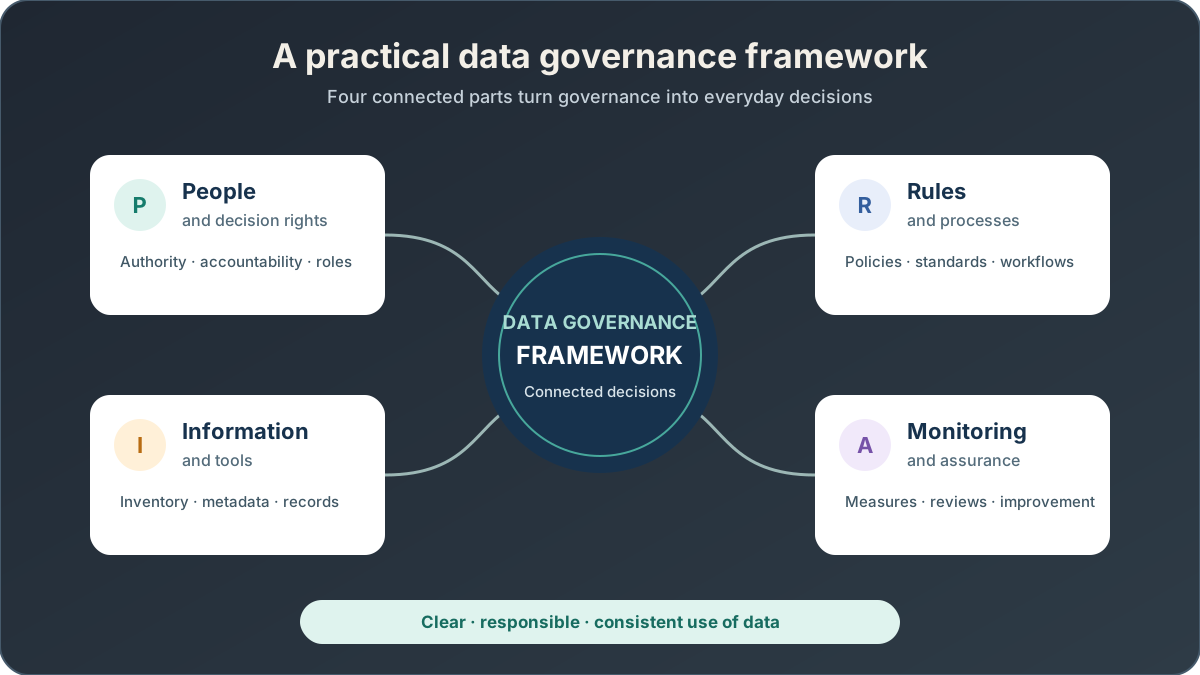
1. People and decision rights
The framework must identify who has authority to make decisions and who is responsible for carrying them out.
This may include an executive sponsor, governance council, data owners, data stewards, technical custodians and specialists. Titles matter less than clarity. For each important decision, the organisation should know:
- Who is accountable for the outcome?
- Who may approve or reject the request?
- Who advises and implements the decision?
- Who must be consulted or informed?
A committee without defined authority can discuss problems but may be unable to resolve them. Similarly, assigning someone as a data owner achieves little unless the organisation defines which decisions that person owns.
2. Rules and processes
Policies establish expectations, but processes show people how to apply them. The framework should connect policies, standards and procedures to recurring decisions such as:
- Approving access to sensitive data
- Correcting a data-quality issue
- Sharing data with another organisation
- Assessing a new analytics or AI use
- Responding to an incident
Good processes should be proportionate to risk. Routine, low-risk decisions should not require the same level of review as sensitive, large-scale or novel uses of data.
3. Information and tools
People cannot govern data they cannot identify or understand. Useful information may include an inventory, business glossary, catalogue, ownership register, risk assessments and sharing records.
Technology can make these records easier to maintain and connect. Access-management systems, workflow tools, data-quality dashboards and catalogues can also support implementation. However, buying a platform does not establish authority, settle competing priorities or create accountability. Tools enable the framework; they do not replace it.
4. Monitoring and assurance
The organisation must be able to determine whether the framework is working. This requires more than counting policies or committee meetings.
Useful measures might include unresolved quality issues, access-review completion, undocumented data assets, overdue actions and repeated incidents. Reviews and audits can test whether responsibilities and controls operate as intended.
Assurance should also create a feedback loop. Findings should lead to corrective action, revised priorities and, when necessary, changes to the framework itself. The Federal Data Strategy playbook specifically recommends a regular process for reviewing and updating the governance framework.
How the framework works in practice
Return to the proposed analytics or AI project.
The business sponsor explains the intended outcome. The relevant data owner decides whether the proposed use is appropriate. Data specialists assess suitability and quality. Privacy, legal and security specialists identify applicable requirements and risks. Technical teams implement approved access and protection measures. The decision, conditions and responsibilities are recorded, and the project is monitored after deployment.
Not every specialist owns the final decision. The framework ensures that the accountable person receives the right information, advice and evidence-and that the decision can later be understood and reviewed.
How to build a data governance framework
Start with real organisational needs.
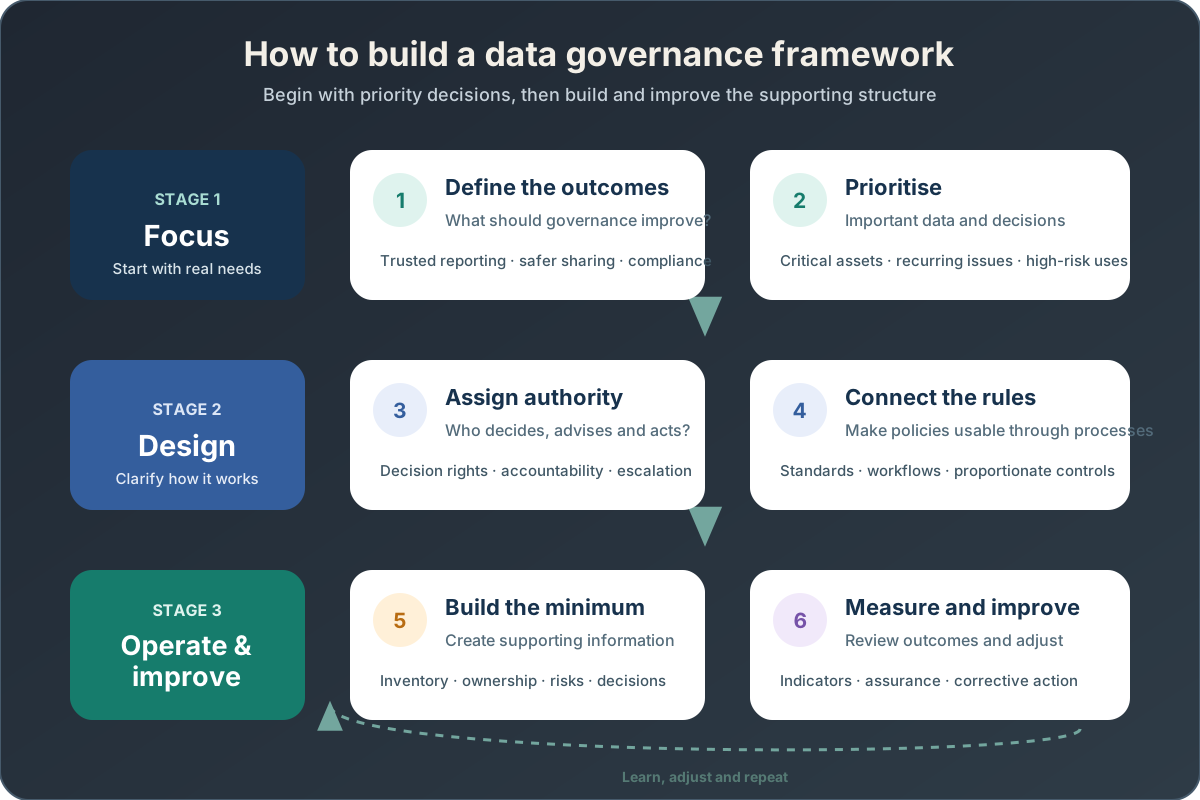
- Define the outcomes. Identify what better governance should improve, such as trusted reporting, safer sharing, regulatory compliance or responsible AI use.
- Prioritise important data and decisions. Begin with critical data, recurring problems or high-risk uses rather than attempting to govern everything at once.
- Assign authority and accountability. Define who decides, who advises and who implements each priority process.
- Connect existing rules and processes. Identify gaps, duplication and unclear escalation routes before creating more documents.
- Build the minimum supporting information. Record important data assets, ownership, definitions, risks and decisions.
- Measure and improve. Select useful indicators, review outcomes and adjust the framework as the organisation learns.
Common reasons frameworks fail
Data governance frameworks often struggle when organisations create committees without authority, write policies that teams cannot apply, assign ownership without decision rights or treat governance only as legal compliance.
Trying to design the complete future framework before addressing a current problem can also delay progress. Early improvements build confidence and reveal how governance must work in practice.
Final takeaway
A data governance framework connects people, decisions, rules, processes, information and evidence. Its value is not the framework document itself. Its value is the organisation’s ability to make responsible and consistent decisions about data-and to show that those decisions are being followed.
The best framework is therefore not necessarily the most elaborate. It is the one people can understand, apply and improve as business needs, technologies and obligations change.